
The Neuroscience of Ketamine: How NMDA Receptors and BDNF Rewire the Brain
When patients ask how ketamine works, the short answer sounds almost too good: it activates the brain's natural capacity to rebuild itself. The longer answer — the one that explains why a single session can shift a decade of depression or anxiety in hours — involves a cascade of receptors, neurotransmitters, and growth factors that look nothing like how SSRIs, SNRIs, or benzodiazepines operate.
This post walks through the actual neuroscience in plain language. If you're considering ketamine therapy at the Ketamine West Grand Junction or Montrose, Colorado clinic and want to understand what's happening inside your brain during treatment, this is the explainer. Call 970-427-4400 (Grand Junction) or 970-200-8365 (Montrose) anytime if you'd rather just talk to a member of our team.
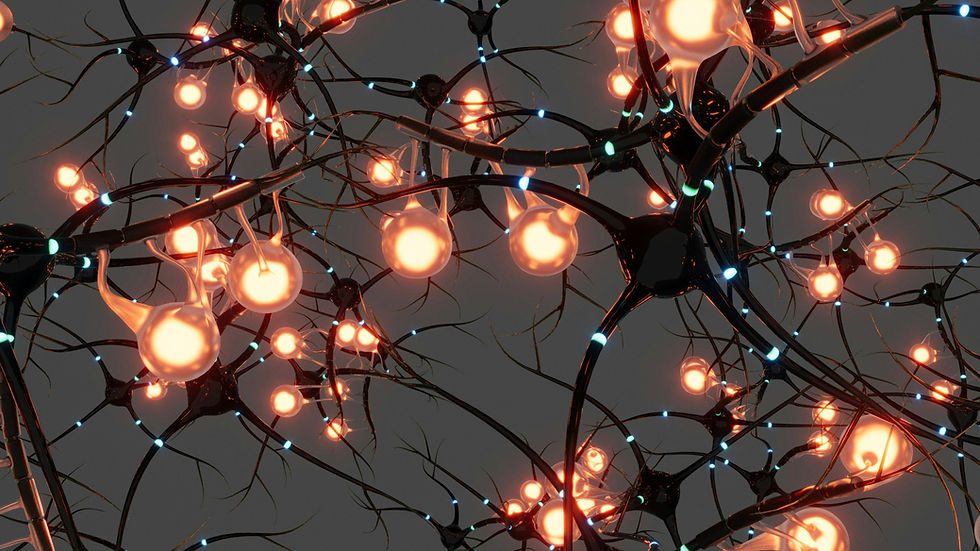
The Glutamate System: The Brain's Main Highway
Most people have heard of serotonin, dopamine, and GABA. Fewer have heard of glutamate, even though it's the most abundant excitatory neurotransmitter in the human brain. Roughly 80% of the brain's synaptic activity runs on glutamate signaling. It's the high-speed rail system underneath everything else.
When the glutamate system is healthy, signals flow cleanly between the prefrontal cortex (planning, self-regulation), the hippocampus (memory, context), and the amygdala (threat detection, fear). When it's dysregulated — as it appears to be in treatment-resistant depression, PTSD, and chronic anxiety — those same circuits either misfire or get locked into rigid, exhausting patterns. The depressed brain isn't underpowered. It's stuck.
NMDA receptors are one of the main switches on the glutamate highway. They sit at the synapse between neurons and decide whether incoming signals turn into lasting connections. In chronic depression and anxiety, research suggests NMDA activity gets hijacked. Chronic stress drives a form of pruning that withers dendritic spines — the tiny branches where neurons communicate — particularly in the prefrontal cortex. The brain literally loses some of its wiring capacity. This is where ketamine comes in.

How Ketamine Disrupts the Stuck Loop — and Why BDNF Matters
Ketamine is a non-competitive NMDA receptor antagonist, which means it temporarily blocks NMDA receptors from firing as usual. Counterintuitively, this brief blockade causes a surge of glutamate release elsewhere in the brain — particularly in the prefrontal cortex. The net effect is a sudden, orchestrated burst of signaling in the exact regions that have been suppressed by depression or chronic anxiety.
That burst triggers the next step in the cascade: the brain's growth-factor response. Brain-derived neurotrophic factor (BDNF) is often called the brain's fertilizer. It promotes the growth and survival of neurons, strengthens existing synapses, and helps form new ones. Depression and chronic stress are consistently associated with reduced BDNF levels, particularly in the hippocampus and prefrontal cortex.
Within hours of ketamine administration, BDNF surges. Downstream of BDNF, a signaling pathway called mTOR activates — and within 24 hours new dendritic spines begin to form. In animal studies, researchers can literally watch new connections sprout under the microscope after a single ketamine dose. This is the biological basis for what patients describe subjectively: a sense that the stuck loop has broken, that something has shifted, that the mind is quieter or more open than it was yesterday.

The Critical Period: Why Integration Supports Lasting Change
One of the most exciting findings in recent ketamine research is that the treatment appears to re-open what neuroscientists call a critical period — a window of enhanced neuroplasticity that mirrors the brain's natural learning phases in early life. During this window, which appears to last days to weeks after treatment, the brain is unusually receptive to new patterns. That's why what happens between sessions matters almost as much as the sessions themselves.
Therapy or intentional reflection helps patients process old patterns while the brain is plastic. Movement and exercise increase BDNF independently and stack with ketamine's effect. Sleep consolidates new neural patterns during deep rest. Adequate protein, omega-3s, novel experiences, and mindfulness practice all support the integration process. The Ketamine West team treats ketamine as a tool, not a cure — the medicine opens the window, and what you do with the window matters. We're here to help you use it well.

Why This Science Matters for Treatment Resistant Depression PTSD, Anxiety, and Burnout
The clinical reality that follows from this neuroscience is what draws most patients to Ketamine West in the first place. Ketamine is safe, effective, and rapid-acting in a way other medications can't match. Relief begins within hours or days, not the six-to-eight weeks required of SSRIs. It tends to work where other medications have failed because the mechanism of action is completely different — so failing serotonergic medications doesn't predict ketamine response.
Research suggests ketamine reduces suicidal thoughts faster than any other known pharmacologic intervention. Unlike benzodiazepines or opioids, supervised medical ketamine carries minimal risk of dependence at therapeutic doses. Because the neuroplasticity effect outlasts the drug itself, benefits often persist long after ketamine has cleared the body.
Multiple randomized controlled trials have shown rapid antidepressant effects from single and repeat doses. The National Institute of Mental Health considers ketamine a breakthrough for treatment-resistant depression, and the FDA has approved esketamine (Spravato) as an intranasal version. At Ketamine West, we use intramuscular ketamine under psychiatric nurse practitioner supervision — an evidence-based route covered by Colorado Medicaid for patients who meet clinical criteria. We're LegitScript-certified, which means our credentialing and safety practices have been independently verified.
Whether you're navigating major depressive disorder, treatment-resistant depression, PTSD, generalized anxiety, or deep burnout, this is the science behind why many patients feel a shift they haven't felt in years.

Our Team Is Here to Help
Our Grand Junction clinic can be reached at 970-427-4400 and our Montrose clinic at 970-200-8365. You can also email info@ketaminewest.com or visit our contact page. Calls and texts are answered Monday through Thursday, and we respond to voicemails and emails within one business day.
The brain is more plastic than most of us were taught. The right tool, used well, can help you find out what that means for you — and we'd love to be part of that conversation.
Comments